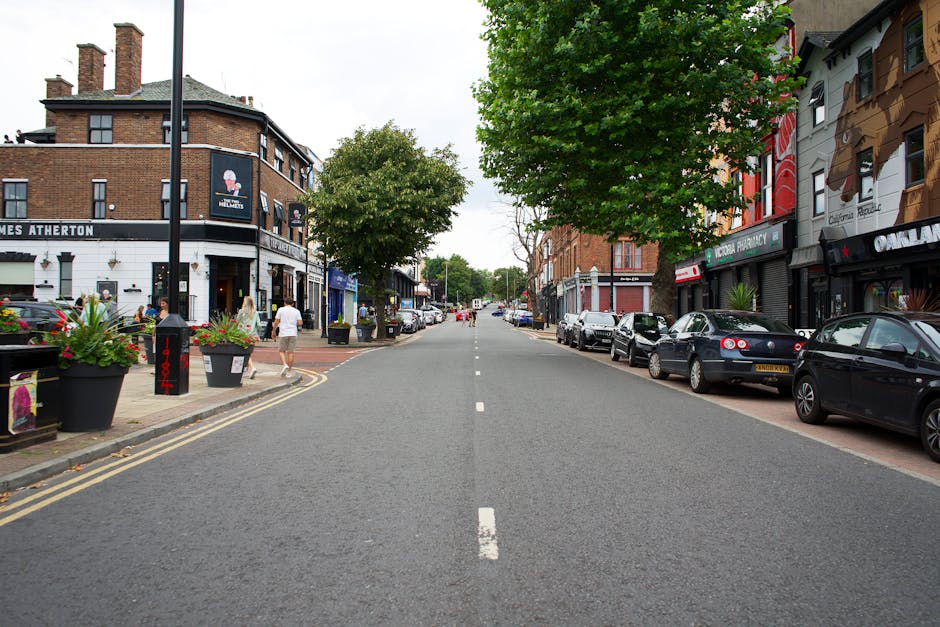
Willesden High Road shop relocation checklist: a practical guide for a smoother move
Relocating a shop on Willesden High Road is never just about shifting stock from one address to another. You are moving opening hours, customer habits, signage, supplies, staff routines, deliveries, till systems, and often a fair bit of stress too. A well-built Willesden High Road shop relocation checklist helps you keep all of that under control, so the move feels planned rather than improvised. Truth be told, the difference between a messy shop move and a manageable one is usually not luck. It is preparation.
Whether you run a small independent store, a takeaway, a salon, a boutique, a convenience shop, or a specialist retail unit, the same principles apply: reduce disruption, protect revenue, and reopen with confidence. This guide walks through the practical steps, the local considerations, the common snags, and the decisions worth making early. If you are trying to move without losing momentum, you are in the right place.
Table of Contents
- Why Willesden High Road shop relocation checklist Matters
- How Willesden High Road shop relocation checklist Works
- Key Benefits and Practical Advantages
- Who This Is For and When It Makes Sense
- Step-by-Step Guidance
- Expert Tips for Better Results
- Common Mistakes to Avoid
- Tools, Resources and Recommendations
- Law, Compliance, Standards, or Best Practice
- Options, Methods, or Comparison Table
- Case Study or Real-World Example
- Practical Checklist
- Conclusion
- Frequently Asked Questions
Why Willesden High Road shop relocation checklist Matters
A shop move has a habit of touching everything at once. Stock needs to be counted, fragile items protected, utilities arranged, new signage fitted, and customers kept informed. On a busy local road like Willesden High Road, timing matters too. Deliveries, parking, access, and footfall can all affect how smooth the move feels on the day.
A strong checklist matters because it turns a big, scattered task into smaller jobs with deadlines. Instead of asking, "Have we sorted the move?", you can ask better questions: Have we confirmed access at the new premises? Are the most valuable items packed first? Have we told suppliers where to deliver? That shift in thinking saves a lot of last-minute panic.
It also helps you protect revenue. A shop relocation is not only a physical move; it is a continuity problem. If you close too early, fail to communicate clearly, or forget a key piece of equipment, you may end up losing trading days you did not budget for. For that reason, many business owners treat the checklist as a working document, not a one-off note.
Expert summary: The best shop relocation plans are simple enough to follow under pressure, but detailed enough to catch the awkward little things - keys, meter readings, card terminals, freezer contents, delivery instructions, and the one shelf bracket that everyone forgets until the last minute.
That may sound obvious, but in practice it is often the small items that create the biggest delay. And yes, someone will always say, "I thought you had that."
How Willesden High Road shop relocation checklist Works
A useful relocation checklist works in stages. You start by deciding what must happen before the move, then what needs doing on the moving day itself, and finally what should be checked after the shop is installed. This makes the process easier to manage, especially if different people handle stock, finance, customer service, and logistics.
The first stage is planning. This is where you map the move date, confirm the new shop layout, identify items that need dismantling, and decide what can be sold, stored, recycled, or discarded. If you have already done a round of decluttering, you are likely to move faster. Our guide on pre-move decluttering is a good companion piece here, because a retail move is a lot easier when you are not transporting dead stock or broken fittings for the sake of it.
The second stage is packing and transport. Retail moves often involve awkward items: glass displays, point-of-sale equipment, shelving, mirrors, rolling racks, storage cabinets, and stock that must stay clean and organised. If the shop includes homeware, furniture, or bulky display items, it can help to review furniture removals in Willesden so you can see how larger pieces are usually handled in a controlled way.
The third stage is reopening. That includes reassembly, cleaning, safety checks, stock placement, and a quick systems test before customers walk in. If your first customer sees a half-connected till or a missing card reader, the day can start badly. Not ideal.
Some businesses also need temporary storage between sites. If that sounds familiar, storage in Willesden can be useful for protecting overstock, seasonal goods, or fixtures that will not fit into the new layout immediately.
Key Benefits and Practical Advantages
The obvious benefit is organisation. The less obvious one is calm. A clear shop relocation checklist reduces back-and-forth decisions, which is often where time disappears.
Here are the practical advantages that matter most:
- Less downtime: You can sequence tasks so the shop is closed for the shortest realistic time.
- Lower damage risk: Fragile stock, fixtures, and equipment are packed with purpose rather than hurriedly bundled together.
- Better staff coordination: Everyone knows what they are doing, which is a relief when the moving van arrives and the place gets busy.
- Cleaner restart: A planned setup means you can open with shelves arranged, systems tested, and the shop presentable.
- Improved customer communication: You can update people accurately instead of sending rushed "we are moving" messages with missing details.
There is also a financial angle. Shops that relocate without planning often end up paying twice: once for the move itself, and again through lost sales, avoidable damage, rushed purchases, or emergency call-outs. A checklist reduces those surprise costs. It does not eliminate them completely, but it gives you a fighting chance.
If you are comparing moving support options, a general overview of removal services in Willesden can help you match the service to the job rather than guessing what you need on the day.
Who This Is For and When It Makes Sense
This guide is for any business owner or manager relocating a retail unit, customer-facing premises, or stock-heavy small business in the Willesden area. It is especially useful if your shop has one or more of the following:
- display furniture or shelving that must be dismantled and rebuilt
- fragile inventory such as glassware, electronics, beauty products, or ornaments
- cold storage units, fridges, or freezers
- specialist equipment, tills, or card-payment devices
- limited loading access or narrow trading hours
- a desire to reopen quickly, ideally with minimal customer disruption
It also makes sense if you are moving from a smaller to a larger unit, or from a busy frontage to a more compact space. The layout changes can be just as challenging as the transport itself. A shop move is not only about boxes. It is also about how customers move through the space once you reopen.
For owners of hospitality-style or food-related businesses, there may be extra equipment concerns too. If fridges and freezers are involved, it is worth reading guidance on maintaining your fridge-freezer and how to keep your freezer safe while not in use. These details can save you from a lot of trouble later.
To be fair, if your move involves only a tiny amount of stock and no fixed equipment, you may not need a very elaborate process. But even then, the checklist prevents those annoying omissions that force a second trip. And nobody enjoys a second trip at 6 p.m. in traffic.
Step-by-Step Guidance
Below is a practical sequence you can adapt for your own relocation. Think of it as the backbone of your shop move.
1. Audit what you are moving
Start with a full inventory. Divide items into stock, fixtures, equipment, paperwork, promotional materials, cleaning supplies, and items to discard. Be honest here. That box of cables nobody has opened in two years is probably not essential.
Record condition as well as quantity. If a display unit already wobbles, moving it badly will not improve matters.
2. Measure both premises
Measure the doors, corridors, stairs, loading points, and the spaces where key fixtures will sit in the new shop. This sounds tedious, but it is one of the easiest ways to avoid a nasty surprise on moving day. A counter that fits in the van may still refuse to fit through the new entrance. Classic.
3. Decide what needs specialist handling
Some items are straightforward. Others are not. Glass cabinets, large mirrors, pianos, refrigeration units, and heavy shelving need proper planning. If your business contains a piano or another high-value specialist item, it is smarter to look at piano removals in Willesden rather than relying on improvised lifting.
Likewise, if you have large assembled furniture or reception units, review whether a man with a van in Willesden is enough, or whether you need a fuller team and additional equipment.
4. Pack by zone or function
Do not pack randomly. Group items by category or by the area of the shop they belong to. For example: checkout, stockroom, front display, storage, or back office. Label each box clearly and include a short destination note. That makes unpacking much easier when you are tired and trying to open on time.
If you need a better packing process, these packing tips for moving are worth a look. The principles work for shops too, not just homes.
5. Protect fragile and high-value items
Use proper padding, strong cartons, stretch wrap, and where needed, corner protection. Do not overload boxes just because they look "nearly full." That is usually how the base gives way. Glassware, cosmetics, electrical goods, and branded stock all deserve extra care.
If you are moving items that are delicate or awkwardly shaped, it can help to review safe lifting guidance for heavy objects before the team starts. It is a simple way to reduce strain and avoid dropped stock.
6. Plan the sequence of the move
Move less essential items first, then priority stock, then the operational equipment that must come down last and go back up first. Many shops benefit from a staged move, where items used for trading are packed in a sequence that mirrors the reopening plan. That way, you are not opening box number 37 just to find the till roll you needed an hour ago.
7. Prepare the new shop before arrival
Clean the new unit, confirm power and lighting, mark where major fixtures will go, and test access points. A little early cleaning makes a big difference. For a practical approach, have a look at cleaning before a move. A fresh start is easier when dust and debris are dealt with early.
8. Reassemble, check, and open in stages
Once the shop is in place, rebuild critical items first: till area, stockroom, back-office essentials, and customer-facing displays. Test your systems before trading. Then walk through the space like a customer would. Is signage visible? Is the entrance clear? Is stock in the right place? Small questions, but important ones.
Expert Tips for Better Results
Shop moves are usually won in the planning phase. Here are the little things that make a noticeable difference.
- Photograph everything before dismantling. Shelving, cable routing, display layouts, and wall-mounted fixtures are much easier to rebuild when you can see how they looked before.
- Keep one "first hour" box. Put in keys, pens, tape, a utility knife, charger cables, a roll of bin bags, basic cleaning supplies, and any paperwork needed to start trading.
- Label by priority, not just contents. "Open first" and "trade later" labels save more time than fancy colour coding, though colour coding can help if you have a large team.
- Leave breathing room for delays. A van stuck behind a delivery lorry, a missing key, a meter reading issue - these things happen. They just do.
- Tell suppliers early. Delivery addresses, contact numbers, and access instructions should be updated before the move, not after.
One useful habit is to appoint a single move lead. It does not have to be the owner. It just has to be someone who can answer questions quickly and make decisions on the spot. Without that, people start asking three different people the same thing, and the day gets noisy very fast.
For business owners who want a local moving partner that understands retail and small commercial jobs, office removals in Willesden can also be relevant, especially where the relocation includes back-office equipment, files, and admin furniture.
Common Mistakes to Avoid
Most shop relocations go wrong for predictable reasons. The good news is that they are avoidable.
- Leaving packing too late: If everything is done on the final evening, the chance of breakage and missed items rises quickly.
- Underestimating access issues: A loading bay, parking restriction, or narrow staircase can change the whole plan.
- Mixing stock with cables and paperwork: It saves time for about five minutes, then creates chaos at the other end.
- Not checking insurance and liability details: This is not glamorous, but it is worth understanding exactly what is covered.
- Forgetting to notify customers and suppliers: People cannot visit, collect, or deliver if they do not know where you are.
- Neglecting the reopening layout: If the new shop feels disorganised, customers notice immediately.
There is also a common assumption that "we will work it out on the day." Sometimes you can. Sometimes you absolutely cannot. The day of a move is not the time to invent a plan from scratch.
If you are not sure what level of support you need, reading about removal services in Willesden can help you compare options before committing.
Tools, Resources and Recommendations
You do not need a mountain of specialist kit, but the right tools make a real difference. A decent shop move typically benefits from the following:
- strong double-walled boxes
- packing tape and dispenser
- stretch wrap and bubble wrap
- marker pens and label stickers
- blankets or protective pads for furniture
- trolleys or sack trucks for heavier items
- zip bags for screws, brackets, and small fixings
- cleaning cloths and basic supplies for the new premises
If your shop carries soft furnishings or display sofas, it helps to treat them carefully during handling and any temporary storage. This is where long-term sofa storage advice can be surprisingly useful, even for retail environments.
For freezers or refrigeration units, a quick refresher on maintaining a fridge-freezer is worth your time, especially if the appliances will be disconnected for any length of time. Small steps now can prevent unpleasant smells, moisture problems, or avoidable wear later.
And if you want to understand how a move might be priced, pricing and quotes is a sensible place to start. That helps you plan the budget properly rather than guessing.
Law, Compliance, Standards, or Best Practice
Commercial relocation in the UK often involves practical compliance rather than one single "shop move law." The exact duties depend on the nature of the business, the building, and the equipment involved. With that in mind, it is wise to treat compliance as part of the checklist, not an afterthought.
Relevant best-practice areas usually include:
- Health and safety: Make sure lifting, carrying, stacking, and moving routes are planned to reduce the risk of injury.
- Risk assessment: Identify hazards such as heavy items, sharp edges, fragile stock, and trip risks before the move starts.
- Insurance: Check what is covered during packing, loading, transit, unloading, and storage.
- Data and payment security: If tills, devices, or records are involved, secure them properly during the move.
- Accessibility and access planning: Consider customer access, step-free entry where relevant, and safe internal movement.
If staff are helping with the move, basic manual handling awareness matters. No one needs heroics. In fact, heroics are usually what causes the problem. A sensible load size, the right equipment, and clear communication will beat "just carry it" every time.
For a clearer view of the standards and policies around moving work, you may also want to review the company's health and safety policy and insurance and safety information. Those pages can help you understand the support expectations before booking.
If you are disposing of packaging, old fittings, or unwanted stock, responsible handling is part of good practice too. The same goes for storage and reuse. A thoughtful approach to recycling and sustainability can reduce waste during a move, which is better for the business and, frankly, better for the planet as well.
Options, Methods, or Comparison Table
There is no one perfect way to relocate a shop. The right method depends on size, stock type, timescale, and budget. Here is a simple comparison to help with planning.
| Method | Best for | Strengths | Limitations |
|---|---|---|---|
| DIY move with staff | Very small shops with light stock and minimal fittings | Lower upfront cost, flexible timing | Higher risk of delay, strain, and damage |
| Man and van support | Small to medium moves with manageable loading | Practical, adaptable, often efficient for local moves | May not suit large equipment or complex shop fittings |
| Full removal service | Busy shops, bulky items, fragile stock, or tight deadlines | More structured handling, better for larger relocations | Usually higher cost than a lighter service |
| Split move with storage | Moves where the new shop is not fully ready | Flexible staging, useful for phased reopening | Needs extra coordination and temporary storage planning |
If the move needs to happen quickly because your lease timing is tight or the old unit is closing fast, same-day removals in Willesden may be worth considering. That said, same-day work is best used for smaller or well-prepared relocations. It is not magic, despite what people hope at 8 a.m. on moving day.
Case Study or Real-World Example
Imagine a small independent shop near Willesden High Road moving into a nearby unit a short walk away. The business sells a mix of packaged stock, display items, a till system, and a few larger fixtures. The owner has one weekend to move, set up, and reopen by Monday morning.
Without a checklist, the likely story is familiar: boxes get packed in a rush, the card reader is put somewhere "safe," shelving screws are scattered, and the cleaning happens after the main items are already in the new shop. The team arrives Monday tired, missing a label printer, and unable to find the charger for the till. Not disastrous, but definitely stressful.
With a checklist, the move looks different. The business:
- packs by zone and priority
- sets aside the first-hour essentials box
- moves the stockroom first and the front display last
- photographs the existing shelving layout
- confirms access and parking in advance
- tests the payment setup before opening
The result is not perfection - real moves rarely are - but the business reopens in a cleaner, steadier way. Fewer surprises. Less shouting. More control. That is usually what people want, even if they do not say it quite like that.
If the shop has seating, waiting areas, or display sofas, a careful approach to handling furniture is crucial. The advice in stress-free moving tips can be surprisingly transferable to commercial relocations, especially where layout and pacing matter.
Practical Checklist
Use the checklist below as a working list in the days and weeks before the move. Tick items off as they are completed, not all at once. That sounds obvious, but it helps.
- Confirm move date and access times.
- Measure doors, lifts, stairs, and loading areas at both premises.
- Complete a full stock and fixture inventory.
- Decide what will be moved, stored, recycled, or discarded.
- Book the right transport and moving support.
- Order boxes, tape, wrapping, labels, and protective materials.
- Back up any business data before moving devices and tills.
- Photograph shelving, furniture, and cable setups before dismantling.
- Label every box by content and destination area.
- Prepare a first-hour essentials box for opening day.
- Notify suppliers, service providers, and customers of the new address.
- Check insurance, liability, and safety arrangements.
- Clean the new premises before items arrive.
- Test power, lighting, internet, payment devices, and tills.
- Rebuild trading areas before decorative or secondary setups.
- Walk through the space as a customer would before opening.
Quick take: if an item is essential to trading, it should be easy to find, easy to identify, and easy to set up. Anything that fails those three tests needs a better label or a better plan.
Conclusion
A shop relocation on Willesden High Road can feel like a lot, especially when trading still has to keep moving in the background. But with a proper checklist, the process becomes far more manageable. You reduce damage, shorten downtime, and make the reopening feel like a step forward rather than a scramble to recover.
The main lesson is simple: plan the move around the way your business actually works. Think about stock flow, access, customer expectations, fragile items, and what must be ready first. The more the checklist reflects real day-to-day trading, the better it will serve you.
If you are at the point where decisions are stacking up and you want the job handled neatly, carefully, and without the usual moving-day chaos, the next step is to compare support options and get a clear quote. A little preparation now can save a great deal of stress later. And honestly, that is a pretty good trade.
Get a free quote today and see how much you can save.
Frequently Asked Questions
What should be included in a shop relocation checklist?
A good checklist should cover inventory, packing materials, access arrangements, transport, insurance, utilities, customer notices, reassembly, cleaning, and reopening tasks. The aim is to move in a sequence that protects stock and reduces downtime.
How far in advance should I plan a Willesden High Road shop move?
As early as you can. For a small local move, a few weeks may be enough if the shop is simple and well organised. For larger retail units, complex fixtures, or temporary storage, more lead time is better. The earlier you measure, label, and book support, the fewer last-minute issues you will face.
Do I need professional help for a small shop relocation?
Not always, but it depends on the stock and fixtures. If you only have a light amount of packaged stock, a simple move may be manageable. If you have heavy units, fragile displays, or time pressure, professional removal support is usually the safer option.
What is the best way to move shop stock without damage?
Pack by category, use strong boxes, avoid overfilling, protect fragile items individually, and label boxes clearly. Keep similar items together so unpacking is faster. If stock is high-value or delicate, use extra padding and avoid loose movement inside boxes.
Should I clean the new shop before moving items in?
Yes, absolutely. Cleaning first is easier than trying to work around boxes and fixtures. A clean floor and clear surfaces also make setup faster and safer. It is one of those boring tasks that pays off immediately.
What if my shop has freezers or fridges?
Then refrigeration planning becomes a key part of the move. You need to think about unplugging, cleaning, safe transit, and restarting the unit properly. Relevant guidance on fridge-freezer care and freezer storage is worth reviewing before the move begins.
How do I reduce downtime during a retail move?
Sequence the move carefully, prepare the new site in advance, move essentials first, and test systems before trading. Clear customer communication also helps, because people are less confused if they know exactly when and where you will reopen.
Can I store some items instead of moving everything at once?
Yes. Temporary storage can be very useful if the new premises are not fully ready or if you are phasing the reopening. It is especially helpful for surplus stock, seasonal items, and furniture that will not fit immediately into the new layout.
How do I know if I need same-day removal help?
If the move date is fixed, the gap between sites is short, and you need fast turnaround, same-day support may be suitable. It works best when the move is already well planned. If the job is large or complex, it is worth discussing the details before assuming same-day is enough.
What should I do with old fixtures, packaging, or unwanted stock?
Sort items early into keep, store, recycle, or dispose. This prevents unnecessary clutter from being transported to the new premises. Responsible recycling and disposal are part of a tidy commercial move and can also reduce waste costs.
How can I make reopening day less stressful?
Prepare a first-hour essentials box, test the till and payment systems, check signage, and walk through the space before customers arrive. Leave room for small delays, because reopening always feels smoother when the essentials are already sorted.
Where can I find support for a local shop relocation in Willesden?
You can review service pages for removals, man and van support, packing, storage, and furniture handling to match the help to your move. A local provider can often make the process simpler by understanding access, timing, and the practical realities of moving in and around Willesden High Road.